
A practical, update-driven guide for HR, payroll, and finance teams.
If your payroll calendar still assumes you have until the middle of the month to pay salaries, it is out of date — and the risk is immediate. Under Ministerial Resolution No. 340 of 2026, wages for a given month must clear through the Wage Protection System by the 1st of the following month. In concrete terms: August 2026 salaries must clear WPS by 1 September 2026. The old 15-day grace period no longer exists.
This is a short, focused guide to what actually changed, who it applies to, the timeline, how MOHRE now catches delays sooner, the penalties for paying late or short, and a compliance action list. For the mechanics of WPS and the SIF file itself, see our WPS compliance guide and SIF files explained; for the announcement-stage breakdown of the resolution — exemptions, exclusions, and third-party processor liability — see our guide to the UAE monthly salary deadline. This piece is about the new deadline and what to do about it.
Informational only — not legal advice. This article summarises general principles as currently published by MOHRE and the UAE Government Portal, and is point-in-time (last updated August 2026). Rules and penalties change. Verify your obligations with MOHRE or a qualified adviser before acting.
What changed
For years, the rule under the earlier framework (Ministerial Resolution No. 598 of 2022) was effectively that salaries were due within 15 days of the end of the wage period. That grace window shaped every payroll calendar in the country — teams routinely closed payroll in the first or second week of the following month.
Ministerial Resolution No. 340 of 2026 changed that. The headline points:
- Salaries must clear WPS by the 1st of the following month. The wage period runs to month-end, and payment must be completed by the 1st — a single, unified deadline.
- The 15-day grace period is removed. There is no longer a two-week runway after month-end. What used to be "due by the 15th" is now "due by the 1st."
- Resolution 598 of 2022 is repealed and replaced by the new framework.
- No weekend or public-holiday extension. The 1st is the 1st. If it falls on a Friday, Saturday, or a public holiday, the deadline does not roll forward — so in practice the file has to be in earlier.
- The on-time compliance threshold is 85% of total wages, an increase from the previous 80%.
The practical effect is that payroll has lost roughly two weeks of slack. A process that comfortably finished on the 10th now has to finish by the 1st — every month, without exception.
Why the change? The unified deadline removes the ambiguity of the old grace window and aligns wage payment with the calendar month, making it simpler for MOHRE to monitor and for employees to know exactly when they should be paid. The trade-off is that it leaves employers with no cushion — the flexibility that the 15-day window provided is gone, and any process that relied on it has to be re-engineered.
The concrete timeline
The rule is easiest to understand as a rolling monthly deadline:
- August 2026 salaries → must clear WPS by 1 September 2026.
- September 2026 salaries → must clear WPS by 1 October 2026.
- …and so on, every month.
Because banks and WPS agents typically need one to two working days to process transfers, a payroll that must land by the 1st has to be funded and submitted by roughly the 29th–30th of the month. And because there is no weekend or holiday extension, a month-end that falls on a weekend pushes the real submission date earlier still. The safe planning assumption is: file by the 28th–29th, land by the 1st.
New deadline vs the old rule
| Old rule (Res. 598 of 2022) | New rule (Res. 340 of 2026) | |
|---|---|---|
| Salary deadline | ~15 days after the wage period | 1st of the following month |
| Grace period | 15 days | None |
| Weekend / holiday extension | Effectively cushioned by the grace window | None — the 1st is fixed |
| On-time threshold | 80% of wages | 85% of wages |
| Detection | Periodic | Earlier / near real-time |
| Example: August pay | Due by around mid-September | Due by 1 September |
The shift is not a minor date change — it is the removal of the buffer the whole system was built around.
Who it applies to
The rule applies to employers who file through the federal Wage Protection System:
- MOHRE-registered mainland companies — in full.
- Participating free zones whose employees hold MOHRE labour cards and file the federal SIF — DMCC, JAFZA, DAFZA, IFZA, RAKEZ and others — the same federal deadline applies.
- DIFC and ADGM run their own independent frameworks and do not file the federal MOHRE SIF, so this specific resolution does not govern them — though they have their own wage rules.
If your employees are paid through a Central Bank-approved WPS agent against MOHRE labour cards, the 1st-of-month deadline is yours.
How MOHRE now detects delays sooner
The deadline change did not arrive alone. Alongside it, the WPS platform moved to faster, more automated monitoring — the December 2025 digital upgrade brought real-time validation of files against registered records. In practice this means:
- A late or missing transfer is flagged quickly, not discovered in a periodic sweep weeks later.
- A file that does not reconcile with the registered contract can be caught at submission.
- The enforcement clock starts almost immediately after the deadline passes, rather than after a long grace window.
The combination is what makes the new rule bite: a shorter deadline and faster detection means less room to be late and less time before consequences begin.
The penalties for late or short payment
Under the current framework, enforcement is graduated and front-loaded, escalating the longer wages remain unpaid. To estimate the exposure of a missed deadline, use our WPS fine calculator.
- From day 2 — notifications and warnings begin, logged against the establishment.
- From day 5 — new work permit applications are suspended, which stalls hiring.
- From day 11 — administrative fines (under the Cabinet Resolution No. 21 of 2020 framework) and possible reclassification to a lower MOHRE category, for establishments with repeated violations within a six-month window. First-time, one-off delays are treated less severely at this stage.
- From day 16 — for larger establishments (25 or more affected workers), a labour dispute can be registered automatically on employees' behalf, with elevated attention on construction, transport, storage, security, cleaning, and recruitment.
- From day 21 — the most serious measures, including asset attachment, travel bans on responsible officials, and referral to Public Prosecution, for persistent violation.
Beyond fines, a category downgrade raises MOHRE service fees, restricts visa quotas, and is visible to banks and partners — often a bigger cost than the fine itself. Paying short (below the 85% on-time threshold without a lawful, coded reason under Article 25) is treated as non-compliance just as paying late is.
It is worth remembering what the rule is ultimately for: the Wage Protection System exists to guarantee that employees are paid in full and on time, and the tightened deadline is aimed at that protection. Late payment is not only a compliance exposure for the employer — it directly affects employees who are counting on a salary arriving when expected. Treating the deadline as a genuine obligation to your team, not just a MOHRE rule to satisfy, tends to produce the cleaner process anyway.
Compliance action list for payroll teams
Practical steps to bring your process in line with the 1st-of-month deadline:
- Move your payroll calendar forward. Rebuild it backwards from the 1st: aim to submit the SIF by the 28th–29th, allowing for bank processing.
- Bring the data cut-off earlier. Lock attendance, overtime, and leave inputs around the 20th–22nd so there is time to calculate, validate, and approve before submission.
- Account for weekends and holidays. Check each month whether the 1st or your submission window falls on a non-working day — the 2026 public holiday calendar is the reference — and file earlier when it does.
- Validate the SIF before submitting. Reconcile header and detail totals, check IBANs and MOL IDs, and confirm salaries match registered contracts — so a rejection does not cost you the deadline. Our WPS SIF generator builds a compliant file.
- Hit the 85% on-time threshold, and back any shortfall with a lawful, correctly coded deduction.
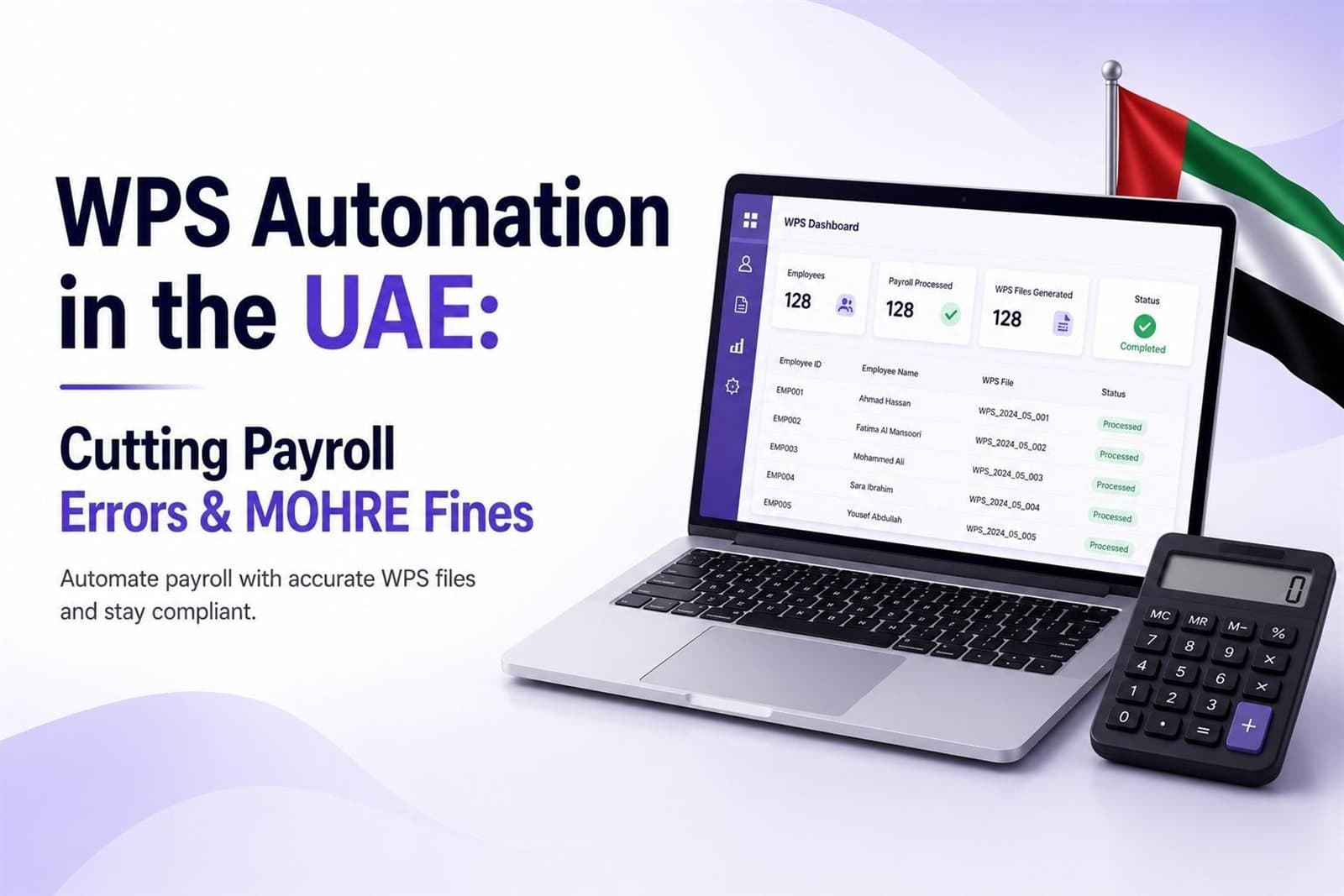
- Automate where the manual steps are. Generating the SIF straight from payroll removes the re-keying that causes late-cycle rejections. See our monthly payroll close guide and payslips & salary structure guide for the surrounding workflow.
- Confirm and archive the agent's acceptance each month as evidence of on-time payment.
The bottom line
The new salary rule is simple to state and demanding to meet: pay by the 1st, every month, with no grace period and no weekend extension. The teams that stay compliant are the ones that moved their whole calendar forward and closed the manual gaps where delays and rejections are born. The deadline is fixed and the detection is fast — the only workable response is a payroll that finishes early by design.
Sources & references
This guide is based on the following official UAE government sources, current at the time of writing (verify the latest versions directly, as the law and MOHRE guidance are updated periodically):
- Ministerial Resolution No. 340 of 2026 on wage payment through the Wage Protection System, repealing and replacing Ministerial Resolution No. 598 of 2022.
- Federal Decree-Law No. 33 of 2021 on the Regulation of Employment Relationships (as amended) and its Executive Regulations — including Article 25 on lawful deductions. Published on the UAE Legislation portal.
- Cabinet Resolution No. 21 of 2020 — the administrative fines framework applied to wage-protection violations.
- MOHRE (mohre.gov.ae) — Wage Protection System guidance, establishment classification, and enforcement procedures.
- UAE Government Portal (u.ae) — wage protection system, the official summary for private-sector employers.
- DIFC and ADGM — separate employment frameworks that do not file the federal MOHRE SIF. Confirm the applicable regime with the relevant authority.
Clear salaries by the 1st, every month
RadixHR closes payroll early by design: attendance, overtime, and leave feed straight into the payroll run, the WPS SIF is generated and validated against MOHRE-registered contracts before submission, deduction caps are enforced at calculation time, and every cycle keeps a full audit trail with bilingual payslips.
This article is for general information only and does not constitute legal or financial advice, and is point-in-time (last updated August 2026). UAE WPS rules, deadlines, thresholds, and penalties are set by MOHRE and the Central Bank of the UAE under Federal Decree-Law No. 33 of 2021, Ministerial Resolution No. 340 of 2026, and related regulations, and are subject to change. The DIFC and ADGM operate separate frameworks. Verify current requirements with MOHRE or a qualified adviser before acting.